SILICON & AI PULSE NVDA $178.67 ▼ -1.61% TSMC $214.30 ▲ +1.42% AMD $162.15 ▲ +0.88% BROADCOM $229.40 ▲ +1.15% APPLE $248.20 ▲ +0.54% MSFT $468.90 ▲ +0.71%
GPUS & CHIPS DESK
NVIDIA May Cut TSMC Chip Orders Amid Mounting Pressure, Report Claims
GPUs & Chips • 41m ago • 1 min read ✓ Read

NVIDIA May Cut TSMC Chip Orders Amid Mounting Pressure, Report Claims

NVIDIA may be slowing down its chip orders at TSMC, according to a new report from Taiwan's Commercial Times. The outlet cites unnamed supply chain sources but doesn't name a product, node, size, or timeline. Neither NVIDIA nor TSMC have commented so far, and the claims are single-sourced for now. The report frames this as NVIDIA being squeezed from inside and out. On the inside, there's Jensen Huang's November 8 email to staff, in which he apologized for an extramarital affair, and the board's independent investigation into reports that he was targeted by a foreign intelligence effort. The board has said it has no reason to believe national security or NVIDIA secrets were compromised. The outside pressure mostly comes down to export controls. The report points to tighter export reviews and H200 chips reportedly stockpiled in Hong Kong, both of which it says raise the risk of NVIDIA scaling back orders.

Read Full Brief →
Why It Matters
  • Neither NVIDIA nor TSMC have commented so far, and the claims are single-sourced for now.
  • Watch street pricing, driver support, and real-world benchmark validation before upgrading.
READER SENTIMENT — 1-TAP VOTE 0 votes
Logitech Unveils Yet Another MX Master 4 Special Edition
⚡ $119.99
GPUs & Chips • 55m ago ✓ Read

Logitech Unveils Yet Another MX Master 4 Special Edition

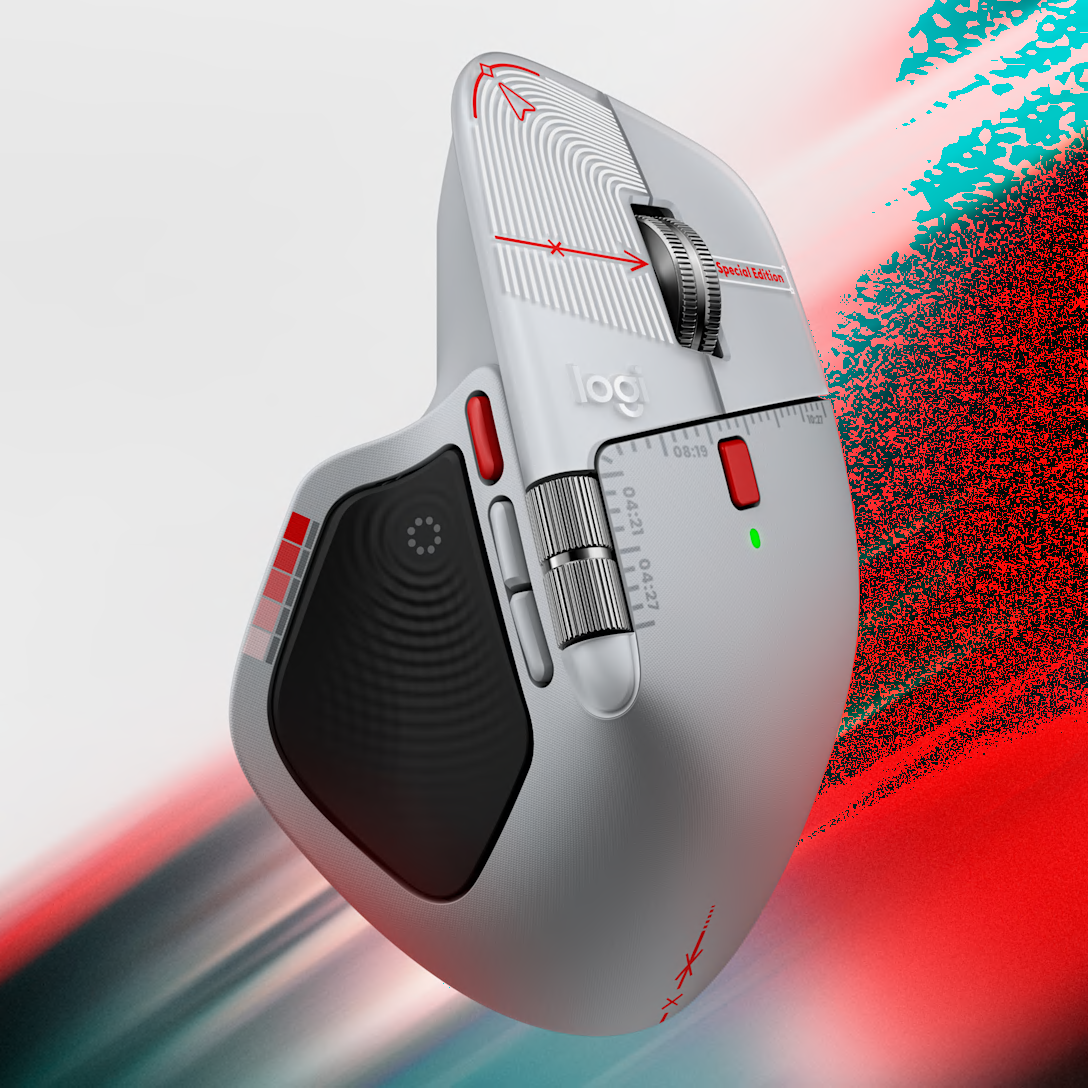
Logitech has introduced another special edition of its MX Master 4 wireless mouse, this time aimed at visual creators. The new MX Master 4 Creator Edition follows the Developer Edition we covered two weeks ago, and keeps the same hardware and features as the standard model. The changes are again limited to the mouse appearance. The Creator Edition uses a studio-inspired design with layout grids, color calibration bands, and alignment crosshairs printed on its surface. Logitech has also added three keyframe style timestamps as Easter eggs: 04:27 for World Design Day, 08:19 for World Photography Day, and 04:21 for World Creativity Day. As with the Developer Edition, there are no changes to the 8,000 DPI sensor, MagSpeed scroll wheel, built-in haptic feedback, or Actions Ring button. The mouse also keeps its 650 mAh battery, rated for up to 70 days of use, along with USB-C charging and multi-device pairing. The MX Master 4 Creator Edition is listed for $119.99 / €129.99 and comes with Logitech's two-year limited hardware warranty.

Read Full Brief →
$119.99
Key figure cited in TechPowerUp report
Why It Matters
  • The changes are again limited to the mouse appearance.
  • Watch street pricing, driver support, and real-world benchmark validation before upgrading.
READER SENTIMENT — 1-TAP VOTE 0 votes
GTA 6 Comes to Xbox One at Launch via Cloud Gaming, PC Players Out of Luck
GPUs & Chips • 2h ago ✓ Read

GTA 6 Comes to Xbox One at Launch via Cloud Gaming, PC Players Out of Luck

Xbox One owners will be able to play GTA 6 when it launches on November 19, while PC players still have no official way in. In its pre-load announcement, which also confirmed a 30 FPS target on consoles, Rockstar says the game will be available through Xbox Cloud Gaming on Xbox Series X|S and Xbox One consoles, using Xbox Series S graphics settings. Xbox says streaming opens at 1 AM ET on launch day, and the game still has to be bought separately. Rockstar also warns that connection speed and other technical factors may affect performance in ways that local play would not. Xbox CEO Asha Sharma framed the news as the start of a much bigger deal with Rockstar's parent company. In a post on X , she called the Xbox One cloud launch the first step of a new 10-year strategic partnership with Take-Two, adding that GTA 6 is already the most pre-ordered game ever on the Microsoft Store. Neither company has shared the terms of that partnership so far. Xbox did confirm that GTA 5, Red Dead Redemption 2, and more Rockstar titles will join Xbox Cloud Gaming in the coming months.

Read Full Brief →
Why It Matters
  • Xbox says streaming opens at 1 AM ET on launch day, and the game still has to be bought separately.
  • Watch street pricing, driver support, and real-world benchmark validation before upgrading.
READER SENTIMENT — 1-TAP VOTE 0 votes
⚡ LATEST DISPATCH STREAM Showing latest 10 of 26 stream dispatches • Page 1 of 3
AI Editorial Illustration (FLUX.1 Schnell • Cloudflare)
⚡ 0.4%
GPUs & Chips • 2h ago • 1 min read ✓ Read

PlayStation Continues PC Withdrawal by Ending PS Plus PC App

Earlier in 2026, it was reported that Sony would no longer be porting the majority of its games to PC , with those reports later being backed up by an official confirmation that narrative games would remain PlayStation exclusive. Now, Sony has announced that it will soon be ending development of the PlayStation Plus PC app, which previously allowed PlayStation Plus Premium subscribers to stream PlayStation Plus games from their PCs. The announcement comes by way of the official PlayStation Blog, which confirms that the app will go offline on December 10, and Sony justifies the move by saying that "less than 0.4%" of PlayStation Plus Premium users actually used the PlayStation Plus app on PC. It also confirmed that it would be ending the PlayStation Plus cloud streaming app on PC at the same time. At the same time, it seems as though Sony is completing its transition away from PC ports, with the recent return of the "PlayStation Exclusive" badge on first-party games, as spotted by @realradec on X . Published by TechPowerUp, this update lands as hardware buyers and self-hosted AI builders weigh price-to-performance, memory bandwidth, and Linux driver support across current-generation platforms.

Read Full Brief →
By ChipJolt Hardware & AI Desk
0.4%
Key figure cited in TechPowerUp report
Why It Matters
  • The announcement comes by way of the official PlayStation Blog, which confirms that the app will go offline on December 10, and Sony justifies the move by saying that "less than 0.4%" of PlayStation Plus Premium users actually used the PlayStation Plus app on PC.
  • Watch street pricing, driver support, and real-world benchmark validation before upgrading.
READER SENTIMENT — 1-TAP VOTE 0 votes
AMD Zen 6 EPYC ‘Venice’ deep dive and benchmarking
⚡ 93%
GPUs & Chips • 5h ago • 1 min read ✓ Read

AMD Zen 6 EPYC ‘Venice’ deep dive and benchmarking

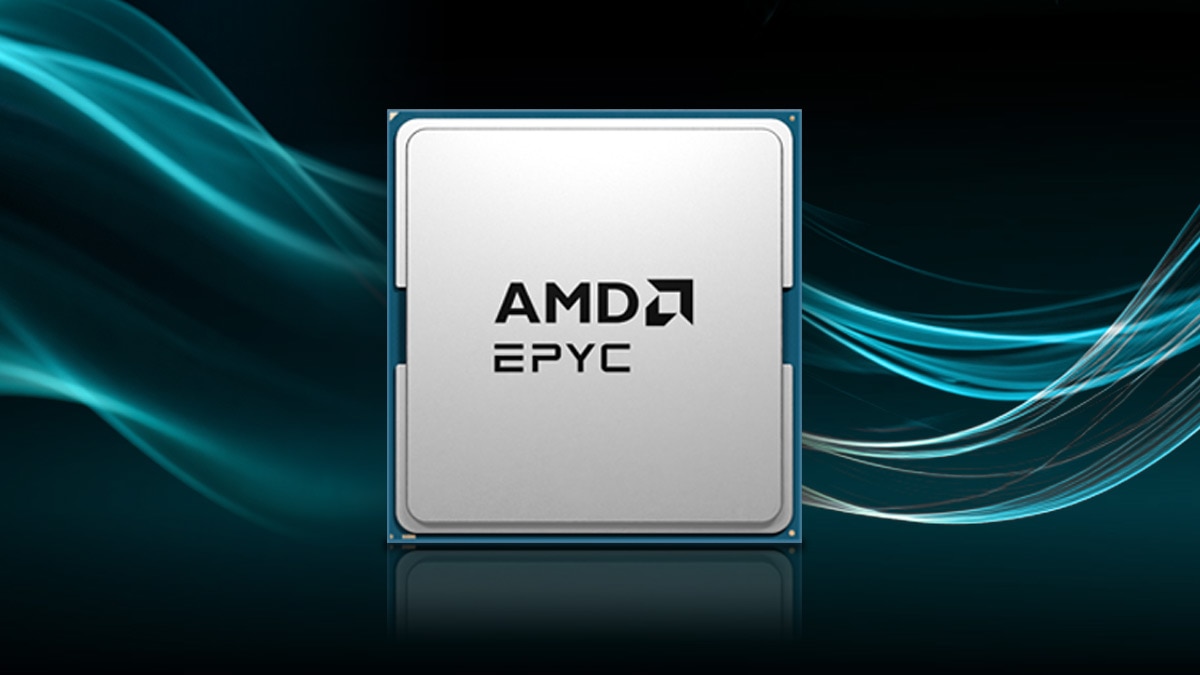
AMD’s EPYC ‘Venice’ CPUs are the first to debut the new Zen 6 architecture, and we’ve been testing two chips from the range over the past several weeks to see how they compare to Nvidia’s Vera, and more broadly, how the Zen 6 architecture departs from Zen 5 ahead of the expected consumer-focused Olympic Ridge launch next year. Zen 5 was a ground-up redesign of AMD’s storied Zen core, and Zen 6 takes that foundation and expands it in just about every regard. Zen 6 uses TSMC’s N2P node, but it also comes with significant architectural changes under the hood. Within the core, a redesigned vector engine pushes AMD’s SIMD performance even higher, and it now natively supports half-precision FP16 instructions alongside full, 32-bit precision. It also splits integer schedulers within the execution engine, allowing for more instructions in flight through the core. Across the die, AMD made other significant changes. The single IOD of previous generations is now split across two IODs, giving the SP7 platform access to 16 memory channels (though at the cost of PCIe 6.0 lanes compared to the previous generation and SP8 platform). The CCDs have been upgraded, too, for the first time since Zen 3.

Read Full Brief →
By ChipJolt Hardware & AI Desk
93%
Key figure cited in Tom's Hardware report
Why It Matters
  • Zen 6 uses TSMC’s N2P node, but it also comes with significant architectural changes under the hood.
  • Watch street pricing, driver support, and real-world benchmark validation before upgrading.
READER SENTIMENT — 1-TAP VOTE 1 vote
AMD EPYC 9686F Benchmarked: 96 Zen 6 Cores Hit 5.3GHz
⚡ 5.3GHz
GPUs & Chips • 5h ago • 1 min read ✓ Read

AMD EPYC 9686F Benchmarked: 96 Zen 6 Cores Hit 5.3GHz

Phoronix benchmarks reveal the AMD EPYC 9686F server processor featuring 96 cores and 192 threads based on the Zen 6 architecture. Production silicon testing confirms a maximum boost frequency of 5.3GHz, exceeding the initially disclosed 5.0GHz target for this high-frequency enterprise part. The tested EPYC 9686F joins AMD's broader Zen 6 server lineup, which notably includes a dual-socket flagship configuration scaling up to 512 cores and 1024 threads via the 256-core EPYC 9996. The 9686F targets performance-per-core workloads requiring high single-thread ceilings alongside dense parallel execution capabilities in enterprise Linux environments. For high-performance computing and dense virtualization hosts, the elevated 5.3GHz boost clock delivers crucial IPC and frequency headroom without sacrificing core count. Linux administrators running heavy compile tasks, database servers, or complex simulation pipelines should evaluate socket power limits and thermal profiles before deployment.

Read Full Brief →
By ChipJolt Hardware & AI Desk
5.3GHz
Production boost clock on 96-core Zen 6 EPYC processor
Why It Matters
  • Production Zen 6 silicon achieves a higher-than-expected 5.3GHz boost clock.
  • The 96-core, 192-thread configuration balances massive parallelism with high clock speeds.
  • Linux server benchmarks confirm significant performance headroom for single-thread-heavy enterprise workloads.
READER SENTIMENT — 1-TAP VOTE 0 votes
AI Editorial Illustration (FLUX.1 Schnell • Cloudflare)
⚡ 128 TB
GPUs & Chips • 5h ago • 45 sec read ✓ Read

(PR) OWC Upgrades ThunderBay 4 with Thunderbolt 5, Expands Capacity with Options Up to 128 TB

Other World Computing (OWC), a trusted leader in high-performance storage, memory, connectivity, software, and accessories that empower creative and business professionals to maximize performance, enhance reliability, and streamline workflows, today announced it has added Thunderbolt 5 capabilities to its flagship OWC ThunderBay 4 RAID solution. With up to 128 TB of capacity, OWC ThunderBay 4 with Thunderbolt 5 brings together powerful features and delivers real-world benefits: Two Thunderbolt 5 Ports - Current-gen Published by TechPowerUp, this update lands as hardware buyers and self-hosted AI builders weigh price-to-performance, memory bandwidth, and Linux driver support across current-generation platforms.

Read Full Brief →
By ChipJolt Hardware & AI Desk
128 TB
Key figure cited in TechPowerUp report
Why It Matters
  • Primary report published by TechPowerUp.
  • Watch street pricing, driver support, and real-world benchmark validation before upgrading.
READER SENTIMENT — 1-TAP VOTE 0 votes
Keychron Launches G25 HE 46 g Gaming Mouse with Razer Viper Mini Shape and Analog Switches
GPUs & Chips • 5h ago • 2 min read ✓ Read

Keychron Launches G25 HE 46 g Gaming Mouse with Razer Viper Mini Shape and Analog Switches

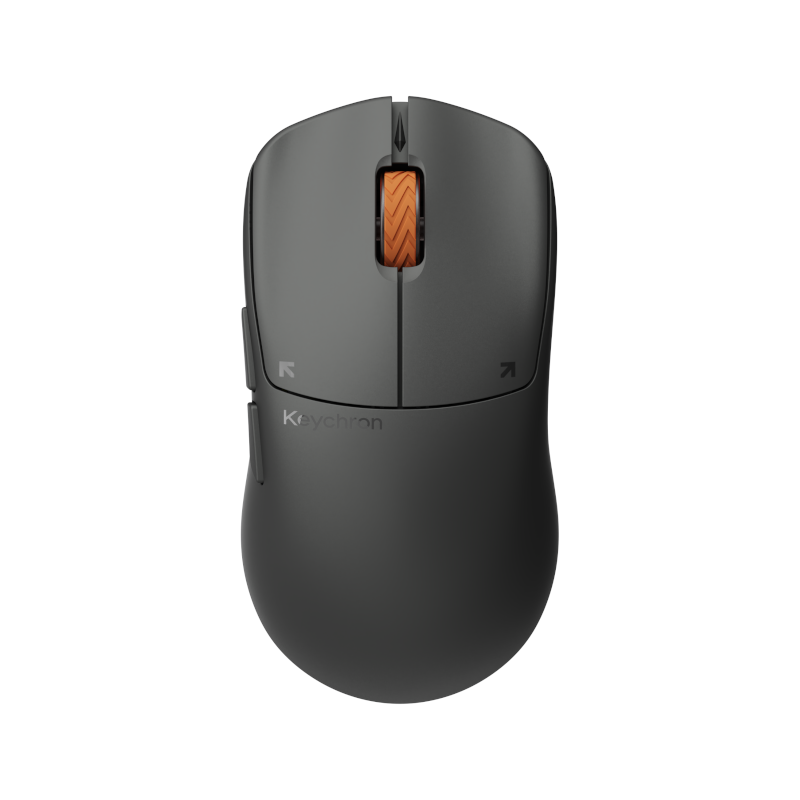
Following the release of the Keychron G6 HE, the brand has been steadily expanding its portfolio of models with Hall effect switches for adjustable actuation and rapid trigger support. The G25 HE is Keychron's latest HE mouse model, recently announced in an X post , and it takes the Hall effect switch tech and the flagship internals of the G6 HE and puts it all into a smaller shape that bears an uncanny resemblance to the Razer Viper Mini and Cobra shapes. Keychron has yet to provide a full spec sheet or product page for the G25 HE, but the mouse has been scanned and submitted to EloShapes for comparisons , where its specs and features are also available. The Keychron G25 HE measures in at 120 × 63 × 39 mm and weighs 46 g, which is on the lighter side for a wireless mouse, but not the lightest by any means. It is also a symmetrical shape with right-side programmable thumb buttons and a partially open bottom plate. The G25 HE is powered by a PixArt PAW 3955 optical sensor and a Nordic 54LM20A MCU, which means it has a peak DPI of 40,000, up to 8 kHz polling rate, and can track at up to 750 IPS and 60 G of acceleration. The star of the show, and the mouse's namesake, are the MagOpt switches which feature both optical and Hall effect magnetic sensing, although the switches still have a click leaf and a distinct tactile bump, which has been largely considered to have a negative impact on the mouse's adjustable actuation trickery.

Read Full Brief →
By ChipJolt Hardware & AI Desk
Why It Matters
  • Keychron has yet to provide a full spec sheet or product page for the G25 HE, but the mouse has been scanned and submitted to EloShapes for comparisons , where its specs and features are also available.
  • Watch street pricing, driver support, and real-world benchmark validation before upgrading.
READER SENTIMENT — 1-TAP VOTE 0 votes
AMD Launches EPYC 9006 'Venice' CPUs Powered by Zen 6 Architecture
⚡ Zen 6
GPUs & Chips • 5h ago • 1 min read ✓ Read

AMD Launches EPYC 9006 'Venice' CPUs Powered by Zen 6 Architecture

AMD has officially launched its EPYC 9006 'Venice' server platform, introducing the Zen 6 CPU architecture to the enterprise market. Independent performance benchmarks published by ServeTheHome confirm the new processors deliver substantial generational gains, positioning AMD to further dominate the data center and high-performance computing sectors. The Venice platform represents a major engineering overhaul, building on two years of development since the prior generation to maximize core density, memory bandwidth, and power efficiency. Early data highlights massive throughput improvements across virtualized workloads, heavy database operations, and large-scale AI cluster orchestration, though exact socket wattages and pricing tiers vary by core configuration. For enterprise buyers and high-end homelab enthusiasts, the platform signals continued competitive pressure on Intel Xeon deployments and promises stronger performance-per-watt metrics. System integrators are rolling out initial hardware configurations now, meaning production servers featuring Venice will hit enterprise datacenters later this quarter.

Read Full Brief →
By ChipJolt Hardware & AI Desk
Zen 6
New AMD EPYC CPU architecture generation
Why It Matters
  • Zen 6 architecture delivers unprecedented core density and performance gains.
  • Enterprise datacenters gain a highly efficient alternative to Intel Xeon processors.
  • Homelab and virtualization workloads benefit from massive generational throughput increases.
READER SENTIMENT — 1-TAP VOTE 0 votes
Secretlab debuts monitor light bar add-on to reduce glare and eye strain
⚡ $179
GPUs & Chips • 6h ago • 1 min read ✓ Read

Secretlab debuts monitor light bar add-on to reduce glare and eye strain

Popular gaming chair and gaming desk manufacturer Secretlab has today unveiled its new ErgoArch monitor lightbar , a new lightbar attachment for owners of its Secretlab monitor arm and a complement to its desk ecosystem. Available now, the new lightbar costs $179. Secretlab ErgoArch Monitor Light Bar Add-On For owners or prospective buyers of the Secretlab Magnus Monitor Arm (the light bar is an attachment to this accessory), the ErgoArch provides overhead lighting for your desk and monitor, reducing reflections and glare, and smoothing out brightness contrast between your display and workspace. Monitor light bars are generally designed to reduce eye strain while you're working or gaming, while also providing some snazzy ambient lighting; the ErgoArch is no different. Secretlab says the ErgoArch provides both ultrawide illumination and focused task lighting depending on how you set it up. The lighting itself is smart and can be powered by Nanoleaf, giving you access via your smart home app to 16.8 million colors. There's also a dedicated wireless control puck, and the lighting temperature ranges from 2700K to 6500K. The light itself is mounted to the monitor arm via a three-point adjustment arm and is compatible with any VESA-mounted monitor, including curved displays.

Read Full Brief →
By ChipJolt Hardware & AI Desk
$179
Key figure cited in Tom's Hardware report
Why It Matters
  • Secretlab ErgoArch Monitor Light Bar Add-On For owners or prospective buyers of the Secretlab Magnus Monitor Arm (the light bar is an attachment to this accessory), the ErgoArch provides overhead lighting for your desk and monitor, reducing reflections and glare, and smoothing out brightness contrast between your display and workspace.
  • Watch street pricing, driver support, and real-world benchmark validation before upgrading.
READER SENTIMENT — 1-TAP VOTE 0 votes
Photo: GAMERCOMP.RU / Unsplash
GPUs & Chips • 6h ago • 1 min read ✓ Read

(PR) MSI Introduces MEG X, the Flagship Intelligent QD-OLED Gaming Monitor

MSI introduces the MEG X, a flagship 34-inch QD-OLED gaming monitor combining advanced on-device AI, next-generation display technology, immersive lighting, and a distinctive Infinity Mirror design. The MEG X features a 34-inch (33.98-inch viewable) UWQHD (3440 × 1440) 5th-Gen QD-OLED panel with Penta Tandem technology, an RGB Stripe sub-pixel layout, and DarkArmor Film, delivering a 360 Hz refresh rate and 0.03 ms (GtG) response time. A dedicated AI Processor powers intelligent visual, audio, and gameplay features, while MSI's exclusive SpectrumBar+ adds real-time lighting feedback for greater immersion. AI at the Core The built-in AI Processor analyzes on-screen content directly on the monitor, enabling real-time AI features without requiring dedicated PC software. Published by TechPowerUp, this update lands as hardware buyers and self-hosted AI builders weigh price-to-performance, memory bandwidth, and Linux driver support across current-generation platforms.

Read Full Brief →
By ChipJolt Hardware & AI Desk
Why It Matters
  • A dedicated AI Processor powers intelligent visual, audio, and gameplay features, while MSI's exclusive SpectrumBar+ adds real-time lighting feedback for greater immersion.
  • Watch street pricing, driver support, and real-world benchmark validation before upgrading.
READER SENTIMENT — 1-TAP VOTE 0 votes
Grand Theft Auto VI Runs at 30 FPS, PS5 Pro Gets PSSR and Ray Tracing
GPUs & Chips • 6h ago • 1 min read ✓ Read

Grand Theft Auto VI Runs at 30 FPS, PS5 Pro Gets PSSR and Ray Tracing

Grand Theft Auto VI is now available for pre-load for gamers who pre-ordered the game, allowing them to start the download. With the game launching on November 19, Rockstar has confirmed that it will run at 30 frames per second on consoles, utilizing their integrated graphics for maximum visual fidelity. This means that while the studio has invested significant resources to maximize the performance of these console graphics cards, the game will be capped at 30 FPS to ensure stability and optimal visual quality. Current generation consoles are limited to 30 FPS, although some will receive additional features. For instance, Sony's PlayStation 5 Pro will offer gamers PlayStation Spectral Super Resolution (PSSR) and ray-traced shadows, exclusive to that console. Although the standard PlayStation 5 supports a similar technology called Quick Spectral Super Resolution (QSSR) , a simplified version of PSSR, it will not be implemented at launch. Only the more powerful PS5 Pro will feature PSSR and ray tracing.

Read Full Brief →
By ChipJolt Hardware & AI Desk
Why It Matters
  • This means that while the studio has invested significant resources to maximize the performance of these console graphics cards, the game will be capped at 30 FPS to ensure stability and optimal visual quality.
  • Watch street pricing, driver support, and real-world benchmark validation before upgrading.
READER SENTIMENT — 1-TAP VOTE 0 votes
ASRock Updates VBIOS Flashing Utility Following Radeon RX 7900 XT/XTX Bricking Reports
GPUs & Chips • 6h ago • 1 min read ✓ Read

ASRock Updates VBIOS Flashing Utility Following Radeon RX 7900 XT/XTX Bricking Reports

ASRock has released an updated version of the ASRVBFlash utility, version 1.0.6, which is intended to fix issues caused by the previous version, 1.0.5, for Radeon RX 7900 XT/XTX users. The earlier version led to reports of ASRock GPUs becoming bricked after users attempted to update the firmware with ASRVBFlash. ASRock has quietly released the 1.0.6 update without providing details on what changes have been made. We only know that this version aims to prevent the bricking of cards and instead properly update the GPU firmware to enhance security, which was the original intent. The initial issue arose when users ran the ASRVBFlash 1.0.5 utility. During the process, Windows would start a reboot sequence, but the system would then fail to boot. At the time, a workaround involved reinstalling an older VBIOS, which some users downloaded from TechPowerUp's VBIOS hosting. Meanwhile, ASRock reportedly removed VBIOS version 1.0.5 from its download pages, although it remained accessible via FTP connections.

Read Full Brief →
By ChipJolt Hardware & AI Desk
Why It Matters
  • ASRock has quietly released the 1.0.6 update without providing details on what changes have been made.
  • Watch street pricing, driver support, and real-world benchmark validation before upgrading.

READER SENTIMENT — 1-TAP VOTE 0 votes