SILICON & AI PULSE NVDA $178.67 ▼ -1.61% TSMC $214.30 ▲ +1.42% AMD $162.15 ▲ +0.88% BROADCOM $229.40 ▲ +1.15% APPLE $248.20 ▲ +0.54% MSFT $468.90 ▲ +0.71%
AI MODELS DESK
AI Editorial Illustration (FLUX.1 Schnell • Cloudflare)
⚡ EPYC
AI Models • 1h ago • 1 min read ✓ Read

AMD Integrates MEXT Predictive AI Memory Tiering for EPYC

AMD has detailed its newly acquired MEXT software technology, enabling NVMe flash memory to function as a DRAM tier on EPYC servers. Driven by a proprietary predictive AI engine, the solution targets crippling enterprise RAM costs but marks a notable departure from AMD's standard open-source Linux software strategy. Acquired this summer, MEXT uses machine learning models to dynamically shuffle data between traditional volatile memory and high-capacity NVMe storage, effectively expanding workspace capacity for massive LLMs and databases. While AMD provides a native Linux driver for enterprise deployment, the software stack remains proprietary, drawing scrutiny from open-ecosystem advocates who rely on transparent kernel integration. For homelab operators and enterprise buyers battling soaring memory pricing, MEXT offers a cost-effective path to scaling massive datasets without populating every DDR5 channel with expensive high-capacity DIMMs. However, the closed-source nature means sysadmins must evaluate potential performance penalties under heavy swap workloads and wait for broader validation across non-EPYC hardware platforms.

Read Full Brief →
EPYC
Target server platform for MEXT memory tiering
Why It Matters
  • MEXT uses predictive AI to treat NVMe SSDs like DRAM.
  • The Linux driver is proprietary, breaking AMD's open-source norm.
  • It offers a lower-cost alternative to high-density DDR5 DIMMs.
READER SENTIMENT — 1-TAP VOTE 0 votes
AI Editorial Illustration (FLUX.1 Schnell • Cloudflare)
⚡ EPYC 9006
AI Models • 5h ago ✓ Read

AMD Execs Deny Zen 6 Was Purpose-Built for Agentic AI

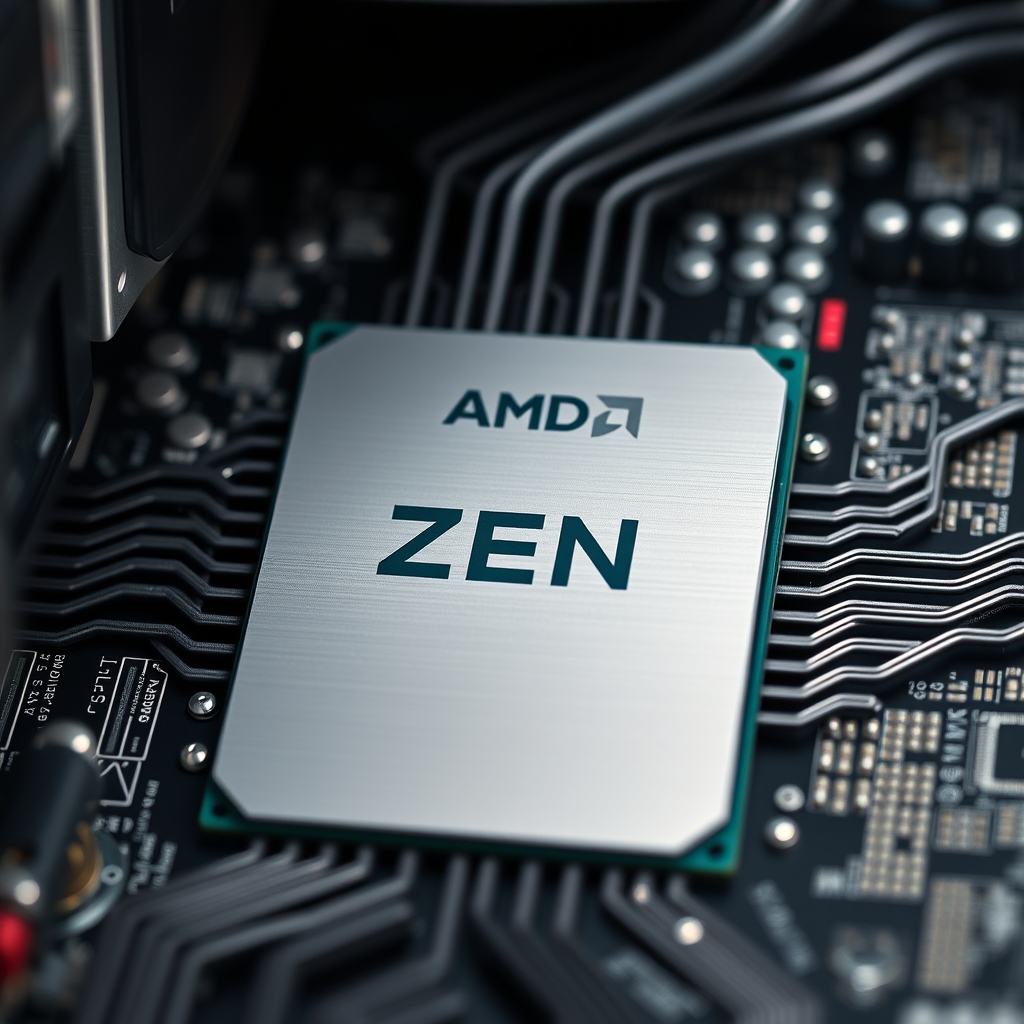
AMD executives have pushed back against marketing claims from Nvidia and Arm, admitting the upcoming Zen 6 architecture was not specifically designed for agentic AI workloads. Corporate VP Madhu Rangarajan and chief Zen architect Mike Clark confirmed silicon development cycles make such rapid-pivot claims implausible. Speaking to media regarding the upcoming EPYC 9006 series and Zen 6 'Venice' microarchitecture, AMD leadership dismissed the notion that silicon architectures can magically predict rapid micro-trends years in advance. While competitors like Nvidia and Arm market their latest Vera and AGI data center CPUs as purpose-built for agentic tasks, AMD maintains that standard hardware versatility remains the actual driver behind modern LLM orchestration. For Linux server administrators and enterprise homelab operators, this candor reinforces that raw general-purpose throughput, memory bandwidth, and core scaling matter more than speculative AI branding. The upcoming Zen 6 platform will rely on broad compute capabilities to handle unpredictable agentic workflows rather than specialized, single-purpose blocks.

Read Full Brief →
EPYC 9006
AMD server CPU line positioned for the agentic era
Why It Matters
  • AMD admits Zen 6 was not engineered specifically for agentic AI.
  • Company executives call out competitor marketing claims from Nvidia and Arm.
  • Standard general-purpose CPU compute remains vital for modern AI orchestration.
READER SENTIMENT — 1-TAP VOTE 0 votes
Photo: Mohammad Rahmani / Unsplash
⚡ 100%
AI Models • 6h ago ✓ Read

KORA Systems Launches NixOS-Based AI Operating System with Local Agentic Workspaces

KORA Systems Inc. has announced KORA, a bottom-up operating system built specifically for AI PCs and agentic workflows. Developed using NixOS as its foundational layer, the platform replaces traditional desktop paradigms with intent-driven neural workspaces, local memory context, and sandboxed execution environments. Rather than running AI models as software layers on top of legacy desktop environments, KORA integrates machine learning models directly into the OS kernel architecture and file management system. The platform organizes workflows entirely around user intent and context while keeping all operational memory and semantic search indexes strictly local to the host hardware. To ensure isolation, every workspace executes inside a dedicated sandbox with granular, application-specific permission controls. For local AI developers and power users, building atop NixOS offers robust package reproducibility and configuration management, making it an appealing option for local homelab orchestration. While enterprise pricing and final hardware validation metrics remain unannounced, the shift toward intent-driven file systems signals a potential new direction for local LLM execution environments.

Read Full Brief →
100%
Local memory retention on device
Why It Matters
  • Built natively on NixOS for reproducible local AI infrastructure.
  • Keeps all model memory and semantic search context strictly on-device.
  • Replaces traditional desktop folders with sandboxed neural workspaces.
READER SENTIMENT — 1-TAP VOTE 0 votes
⚡ LATEST DISPATCH STREAM Tap Read Full Brief for complete story or Show Takeaways for quick summary
Photo: Dimitri Karastelev / Unsplash
⚡ 49%
AI Models • 9h ago • 45 sec read ✓ Read

Nvidia Imposes 49% Revenue Cap on Cloud Partners Renting AI GPUs to China

Nvidia is reportedly restricting cloud service partners from allocating more than 49% of their Chinese business to AI GPU rentals. The measure follows Chinese firms purchasing over one million consumer gaming and workstation GPUs.

Read Full Brief →
By ChipJolt Hardware & AI Desk
49%
Maximum cap on cloud partner business allocated to China
Why It Matters
  • Chinese entities have acquired over one million gaming and workstation GPUs to bypass export controls.
  • The 49% cap targets overseas cloud brokers routing high-end hardware into restricted markets.
  • Homelab and enterprise workstation availability could shift as regional cloud allocations tighten.
READER SENTIMENT — 1-TAP VOTE 0 votes
Photo: Luke Jones / Unsplash
AI Models • 9h ago • 1 min read ✓ Read

New framework grades AI jailbreaks across capability gains, scope, and how easy they are to deploy

In recent months, high-profile headlines about AI models letting loose from their safeguards dominated headlines. Now, the Frontier Model Forum (FMF) has released a new Jailbreak Rating Framework that aims to track how easy it might be for a given AI model to get around safeguards. The framework also estimates the scale of the collateral damage, should an AI model wreak cyber-havoc across the internet. The project started in 2023 with the support of four founding companies: Anthropic, Google, Microsoft, and OpenAI. The published Jailbreak Rating Framework is a rough analog to the well-known CVSS security rating system, but specifically targeted at classifying the type and severity of LLM jailbreaks across various axes and multiple frontier LLM providers. Many AI companies and evaluation entities already have their own rating systems, but the FMF intends for its scale to be a cross-vendor standard that teams developing patches can rely on. The FMF's approach is to have a classification method for jailbreaks that can make a model perform cyber-warfare operations beyond what's already out, across both the regular and black market. Version 1.0 of the proposal is a work-in-progress, and the group is taking comments and suggestions on it until December 21, noting that relying on its system in the meantime is inadvisable.

Read Full Brief →
By ChipJolt Hardware & AI Desk
Why It Matters
  • The framework also estimates the scale of the collateral damage, should an AI model wreak cyber-havoc across the internet.
  • Watch street pricing, driver support, and real-world benchmark validation before upgrading.
READER SENTIMENT — 1-TAP VOTE 0 votes
Mac Studio M5 Ultra Benchmarked on Massive Local AI Models
⚡ $12,300
AI Models • 9h ago • 1 min read ✓ Read

Mac Studio M5 Ultra Benchmarked on Massive Local AI Models

Apple's Mac Studio equipped with the M5 Ultra SoC has been benchmarked against high-density local AI workloads. The system features a 36-core CPU, an 80-core GPU, and up to 512GB of unified memory with 1.2 TB/s of memory bandwidth. Configured units cost upwards of $12,300 with a 13 to 15-week shipping lead time. Testing pushed past compact dense models like Qwen 3.8 27B to saturate the massive memory pool with cutting-edge large architectures such as DeepSeek V4.1 Flash 1017 and GLM 5.3 Flash. Using Artificial Analysis' AgentPerf-Local benchmark via llama.cpp, the M5 Ultra's 80-core GPU and 1.2 TB/s decode bandwidth were put up against Nvidia's DGX Spark platform, which utilizes 48 Blackwell SMs and 273 GB/s of memory bandwidth. While the Mac hardware shows staggering raw specs, local AI enthusiasts must weigh the $12,300 price tag against practical agentic task performance and delivery times. Buyers looking to run massive unquantized models locally should monitor upcoming llama.cpp backend updates and verify real-world token throughput before placing orders.

Read Full Brief →
By ChipJolt Hardware & AI Desk
$12,300
Starting price for maxed-out M5 Ultra configuration
Why It Matters
  • M5 Ultra delivers 1.2 TB/s of unified memory bandwidth for massive local models.
  • Maxed-out configurations with 512GB RAM cost upwards of $12,300.
  • Apple's 80-core GPU dwarfs rival decode bandwidth specs by over 4x.
READER SENTIMENT — 1-TAP VOTE 0 votes
Photo: Alexandre Debiève / Unsplash
⚡ 2014
AI Models • 9h ago • 1 min read ✓ Read

Linux Kernel Dev Steps Down Over AI Patch Flood

Arm kernel developer and memory management expert Lorenzo Stoakes has stepped down from several review roles, citing an unsustainable influx of low-quality, AI-generated code contributions. Stoakes, a contributor since 2014, confirmed the decision after reviewing a massive surge of automated patches that overwhelmed core maintainer bandwidth. The surge in AI-assisted pull requests has severely impacted the efficiency of core Linux kernel subsystems, forcing senior maintainers to spend disproportionate hours filtering out unverified or hallucinated code. While generative models have accelerated boilerplate development in some sectors, critical upstream maintainers argue that the sheer volume of superficial submissions now threatens core upstream stability and reviewer retention. This bottleneck poses immediate scaling risks for enterprise Linux distributions and homelab operators relying on bleeding-edge upstream kernels for advanced hardware enablement. Downstream maintainers are now weighing stricter automated validation gates and mandatory contributor verification protocols to curb the influx of unvetted LLM-generated commits.

Read Full Brief →
By ChipJolt Hardware & AI Desk
2014
Lorenzo Stoakes' start year as a Linux kernel contributor
Why It Matters
  • Core Linux maintainer burnout is accelerating due to unvetted AI patch volumes.
  • Upstream review cycles face potential delays impacting new hardware enablement.
  • Stricter contribution barriers may soon be enforced across critical kernel subsystems.
READER SENTIMENT — 1-TAP VOTE 0 votes
OpenAI Publishes EMEA Education Research and AI Guidance Insights
AI Models • 12h ago • 45 sec read ✓ Read

OpenAI Publishes EMEA Education Research and AI Guidance Insights

OpenAI released findings from its EMEA education partnerships and new ThinkYoung research focused on AI integration in classrooms. The report details frameworks for supporting teachers and fostering AI literacy among students.

Read Full Brief →
By ChipJolt Hardware & AI Desk
Why It Matters
  • Outlines formal educational strategies for generative AI tools.
  • Focuses on teacher support and independent student learning.
  • Details regional implementation data from EMEA partnerships.
READER SENTIMENT — 1-TAP VOTE 0 votes
Photo: Untitled Photo / Unsplash
⚡ $3.4B
AI Models • 12h ago • 45 sec read ✓ Read

Anthropic Secures $3.4B in Gas Generators to Bypass Power Waitlists

Anthropic has committed $3.4 billion to acquire 1.7 gigawatts of gas-fired generators from OnePWR Solutions by absorbing existing Caterpillar orders. The agreement allows the AI firm to bypass six-year utility queue delays to power its infrastructure.

Read Full Brief →
By ChipJolt Hardware & AI Desk
$3.4B
Value of the gas turbine generator deal with OnePWR Solutions
Why It Matters
  • AI data center expansions are increasingly relying on off-grid power solutions due to grid congestion.
  • Acquiring existing turbine orders circumvents multi-year equipment backlogs.
  • Massive private power acquisition highlights the severe energy demands of scaling model training.
READER SENTIMENT — 1-TAP VOTE 0 votes
Google Expands TPU Lineup with TPU 8tx and 8i Max Processors
⚡ 8
AI Models • 12h ago • 45 sec read ✓ Read

Google Expands TPU Lineup with TPU 8tx and 8i Max Processors

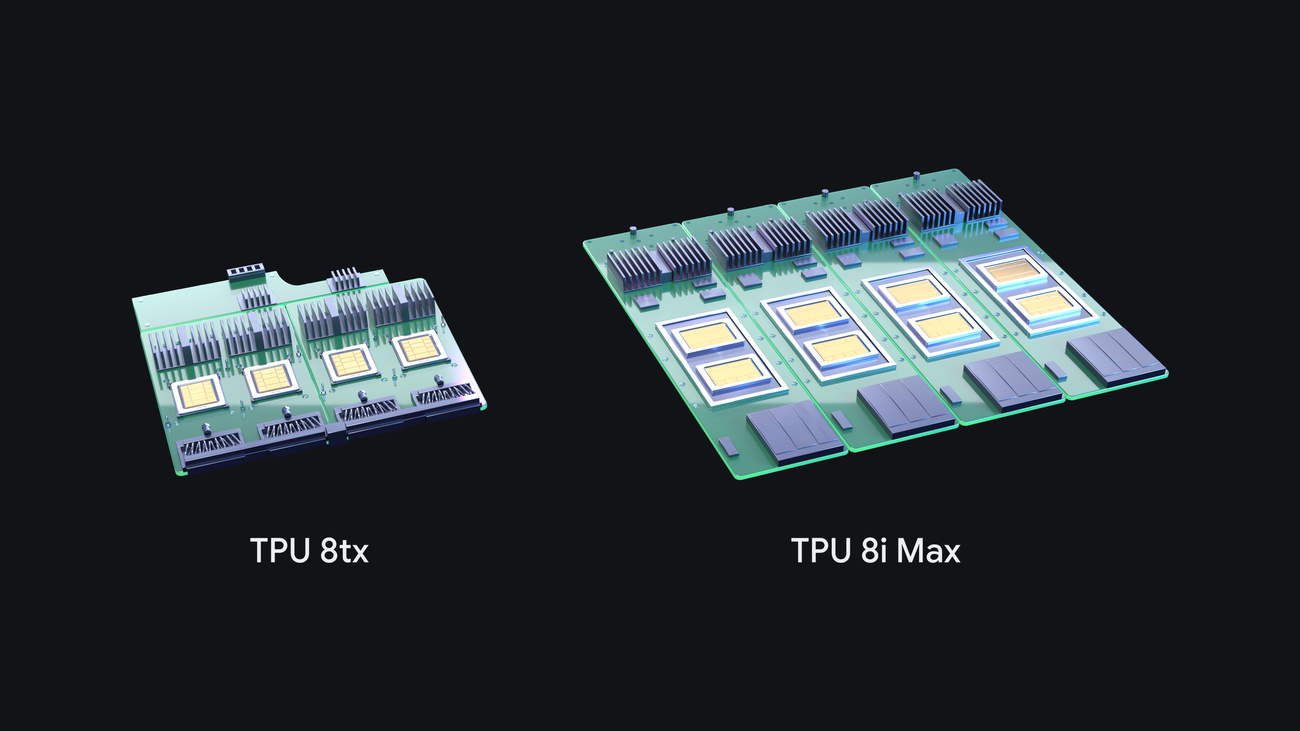
Google announced the expansion of its Tensor Processor Unit lineup with the new TPU 8tx and 8i Max accelerators. The company confirmed the systems are designed to handle large context windows and specialized encryption workloads.

Read Full Brief →
By ChipJolt Hardware & AI Desk
8
TPU Generation Series
Why It Matters
  • New TPU systems target agent-scale computing and massive context windows.
  • Specialized encryption capabilities are added for highly regulated enterprise customers.
  • Recent PyTorch integration aims to improve accessibility for developers and cloud customers.
READER SENTIMENT — 1-TAP VOTE 0 votes
ChatGPT Enterprise Now Available on AWS Marketplace
⚡ AWS
AI Models • 19h ago • 45 sec read ✓ Read

ChatGPT Enterprise Now Available on AWS Marketplace

OpenAI announced that ChatGPT Enterprise is now available for purchase directly through the AWS Marketplace. The integration allows organizations to route subscription billing and procurement through their existing AWS accounts.

Read Full Brief →
By ChipJolt Hardware & AI Desk
AWS
Cloud marketplace integration for enterprise billing
Why It Matters
  • Simplifies software procurement by consolidating billing with existing cloud infrastructure.
  • Eliminates the need for separate vendor onboarding processes for enterprise customers.
  • Expands enterprise access to OpenAI tools within AWS-managed compliance frameworks.
READER SENTIMENT — 1-TAP VOTE 0 votes
Photo: Dimitri Karastelev / Unsplash
⚡ 2x
AI Models • 19h ago • 45 sec read ✓ Read

Google Details TPU 8tx with AMD EPYC Turin and TPU 8i Max with Doubled Memory Bandwidth

Google has announced the TPU 8tx, which pairs AMD EPYC Turin hosts with confidential computing capabilities. Additionally, the company revealed the TPU 8i Max, designed to double memory bandwidth for inference workloads.

Read Full Brief →
By ChipJolt Hardware & AI Desk
2x
TPU 8i Max memory bandwidth increase for inference
Why It Matters
  • TPU 8tx integrates AMD EPYC Turin processors with hardware-based confidential computing.
  • TPU 8i Max doubles memory bandwidth specifically to accelerate inference performance.
  • The hardware updates expand Google's custom accelerator deployment options for enterprise and cloud workloads.
READER SENTIMENT — 1-TAP VOTE 0 votes